Tanks, piping, and process vessels in the petrochemical industry are constantly exposed to aggressive chemicals, high temperatures, and abrasive flow conditions that accelerate material degradation.
Industry studies from AMPP (formerly NACE International) estimate that corrosion costs the global process industries, including petrochemical operations, billions of dollars annually, with internal corrosion from acids, solvents, and hydrocarbons contributing significantly to unplanned equipment failures.
Therefore, corrosion isn’t just a maintenance concern — it’s a safety, reliability, and cost-control issue.
Rubber lining remains one of the most effective long-term solutions for protecting petrochemical equipment against corrosion. When properly specified and installed, it creates a durable barrier that resists chemical attack, absorbs mechanical stress, and significantly extends the life of the equipment.
For facilities operating under constant chemical exposure, rubber lining is often the difference between reactive repairs and long-term reliability.
Why Is Corrosion Such a Serious Risk in the Petrochemical Industry?
Petrochemical processing environments combine multiple corrosion drivers that accelerate material degradation.
Common Petrochemical Corrosion Stressors:
- Aggressive chemicals
- Sulfuric, hydrochloric, and nitric acids
- Hydrocarbons and solvents
- Mechanical wear
- Slurries and particulate flow
- High-velocity abrasion at elbows and bends
- Thermal and pressure cycling
- Expansion and contraction
- Vibration and pressure fluctuations
The Result:
- Accelerated metal loss
- Increased leak risk
- Unplanned shutdowns
- Shortened equipment lifespan
How Rubber Lining Protects Petrochemical Tanks, Pipes, and Vessels
Rubber lining provides multi-layered protection that addresses the unique challenges of petrochemical processing. The standout features of rubber lining include:
Chemical Resistance
- Forms a thick, impermeable barrier against acids, solvents, and hydrocarbons
- Slows chemical permeation to protect the steel substrate
- Rubber compounds are selected based on:
- Chemical compatibility
- Temperature exposure
- Concentration and contact time
Abrasion and Impact Resistance
- Absorbs impact from solids and slurries
- Resists erosion in:
- Transfer piping
- Elbows and bends
- High-turbulence zones
Thermal and Mechanical Flexibility
- Expands and contracts with equipment
- Reduces:
- Cracking
- Delamination
- Edge failure during startups and shutdowns
Petrochemical Equipment That Benefits Most From Rubber Lining
Rubber lining is commonly specified for petrochemical equipment where corrosion risk and downtime costs are highest, including:
- Storage tanks (acids, intermediates, waste streams)
- Process vessels and reactors
- Heat exchangers and absorber towers
- Transfer piping, elbows, and reducers
- Railcars and transport vessels handling corrosive chemicals
Protecting these assets helps facilities maintain uptime and control lifecycle costs.
Rubber Lining vs. Coatings in Petrochemical Applications
While coatings can be effective in mild to moderate environments, petrochemical conditions often exceed their practical limits. Let’s take a closer look:
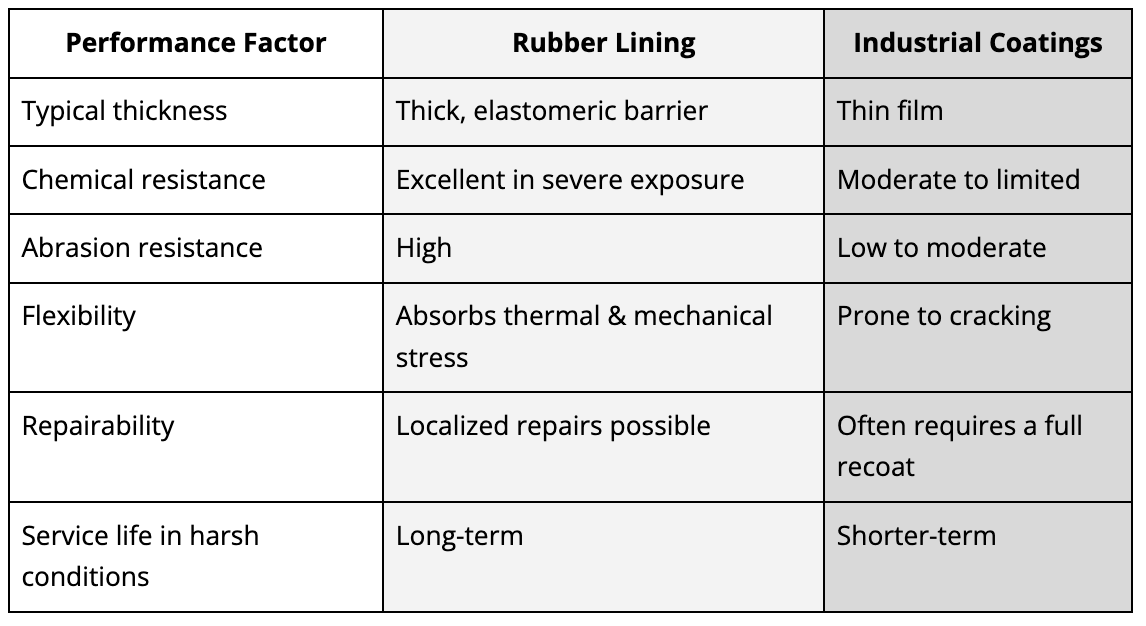
Key Takeaway:
When exposure is continuous or severe, rubber lining typically offers longer service life and lower total cost of ownership than coatings.
Us RUBBER’S Approach to Petrochemical Rubber Lining Systems
US RUBBER engineers rubber lining systems specifically for the harsh demands of petrochemical processing environments.
Each project begins with a detailed evaluation of chemical exposure, temperature range, mechanical stress, and operating conditions. From there, the appropriate rubber compound is selected to ensure compatibility and long-term performance.
Surface preparation and installation follow strict quality standards to ensure proper adhesion and uniform coverage. Inspection and testing protocols are integrated throughout the process to verify lining integrity before equipment is returned to service.
US RUBBER supports:
- New equipment lining
- Relining of existing assets
- Targeted repairs to extend service life
Common Failure Points in Petrochemical Equipment [and How Proper Rubber Lining Prevents Them]
Many premature failures stem from avoidable issues, including:
Common causes of failure:
- Incorrect compound selection
- Inadequate surface preparation
- Mismatched lining systems
- Insufficient inspection or testing
How proper rubber lining prevents failure:
- Compounds matched to actual process conditions
- Strict prep and installation standards
- Quality checks are built into every stage
This approach minimizes downtime and reduces the risk of unexpected corrosion-related shutdowns.
FAQs: Rubber Lining in the Petrochemical Industry
Q. How long does rubber lining last in petrochemical environments?
A. The service life of rubber lining depends on chemical exposure, temperature, and operating conditions in the petrochemical industry. Properly specified rubber linings can last many years with routine inspection and maintenance.
Q. Can rubber lining handle high temperatures and aggressive solvents?
A. Yes. Specialized rubber compounds are designed to withstand elevated temperatures and aggressive chemical exposure when correctly selected for the application.
Q. Is rubber lining repairable without full replacement?
A. In many cases, yes, rubber lining can be repaired. Localized repairs can be performed to address wear or damage, extending service life without requiring full relining.
Q. How do I know which rubber compound is right for my application?
A. Compound selection should be based on chemical compatibility, temperature, abrasion risk, and mechanical stress. Working with an experienced rubber lining provider ensures the system is correctly engineered for your process.
US RUBBER: Extending Equipment Life in Petrochemical Facilities
In petrochemical operations, corrosion protection is a long-term reliability strategy, not a short-term fix. Rubber lining provides the chemical resistance, abrasion protection, and flexibility required to safeguard critical tanks, pipes, and vessels.
US RUBBER is the solution. Our rubber lining solutions reduce downtime, improve safety, and extend the usable life of critical assets. For petrochemical facilities seeking dependable corrosion protection, partnering with our experienced rubber lining specialists is essential.
Talk with US RUBBER about specifying the right rubber lining system for your petrochemical application today.