In the rubber lining industry, buyers often assume that every contractor provides the same level of service. In reality, there’s a major difference between standard rubber lining services and a turnkey lining solution that manages the entire project from start to finish.
For engineers, maintenance leaders, and procurement teams, knowing this distinction can help reduce downtime, eliminate coordination issues, and ensure long-term performance.
This article breaks down those differences so you can make a more informed decision and see how a turnkey partner like US Rubber delivers greater reliability and consistency across every stage of the lining process.
Quick Definition: What Is Turnkey Lining?
Turnkey lining is a full-service rubber lining solution where a single contractor manages every stage of the project — from initial surface preparation to final QA testing and delivery.
Instead of coordinating multiple vendors for blasting, lining, curing, inspection, and transport, a turnkey provider handles the entire workflow under a single project plan.
In practical terms, turnkey lining ensures:
- Consistent prep standards
- Controlled installation conditions
- Documented inspections
- Predictable timelines
- One point of accountability
For operations and maintenance teams, the result is a smoother project with fewer delays, fewer handoffs, and a lining system that performs as expected over the long term.
Standard Rubber Lining Services: What’s Typically Included (and What’s Not)
Most rubber lining providers offer a basic installation service focused solely on applying the lining material.
While this approach works for straightforward jobs, it leaves several critical steps outside the contractor’s responsibility—steps that can directly impact adhesion, cure quality, and long-term performance.
What Standard Rubber Lining Services Usually Include:
- Basic surface preparation, such as light blasting or cleaning.
- Rubber lining installation performed in a shop environment.
- General curing procedures with limited monitoring.
- Visual inspection to confirm the lining appears uniform.
These services address the application itself but do not ensure the overall system is engineered, installed, and verified to withstand your operating conditions.
What Standard Rubber Lining Services Typically Do Not Include:
- Detailed project planning or coordination.
- Advanced surface prep (steel repairs, weld grinding, corrosion removal).
- Engineering guidance on material selection.
- Formal QA/QC testing, such as spark testing, thickness verification, or adhesion testing.
- Documentation for compliance, commissioning, or future maintenance.
- Transport logistics or installation oversight once the vessel leaves the facility.
Because these tasks fall to the customer (or to other vendors), standard lining can introduce schedule gaps, inconsistent quality, and higher project risk, especially in environments with severe chemistries or tight maintenance windows.
Turnkey Lining Services: What a Full-Service Rubber Lining Contractor Actually Provides
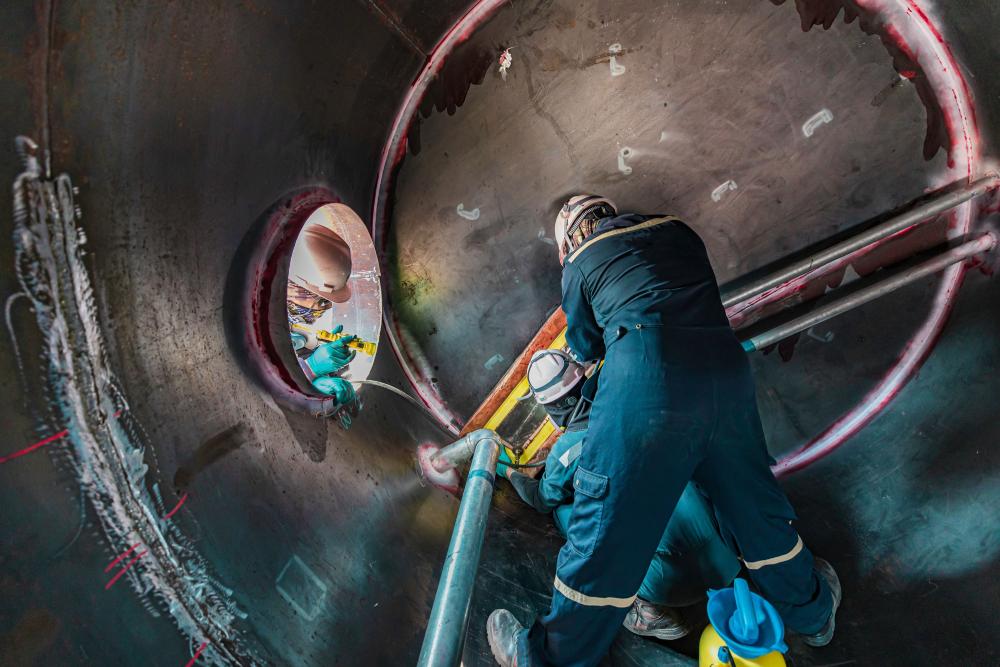
A turnkey lining solution goes far beyond simply installing rubber. It delivers a fully coordinated, fully accountable process that ensures the lining system performs reliably from day one.
For plants operating under strict downtime limits or corrosive conditions, this comprehensive approach can be the difference between a smooth project and a costly shutdown.
1. Project Planning and Coordination
Turnkey providers manage schedules, communication, and workflow from start to finish.
- This eliminates the need for customers to coordinate surface prep crews, transport providers, or inspectors.
2. Surface Preparation Done to Specification
Proper rubbing lining adhesion depends on the condition of the steel. A turnkey contractor performs:
- Abrasive blasting to the required profile
- Weld grinding and steel repairs
- Removal of rust, scale, and contamination
- Final cleanliness verification
This ensures the substrate is engineered for long-term bonding.
3. Material Selection and Engineering Guidance
Instead of leaving rubber lining material choice to chance, turnkey teams help evaluate:
- Chemical exposure
- Service temperature
- Mechanical stresses
- Expected service life
The result is a lining system matched to real operating conditions, not assumptions.
4. Professional Rubber Lining Installation and Curing
All installation steps (from tack cement to skiving, rolling, and curing) are performed under controlled conditions with trained technicians. Curing cycles are monitored and documented to verify material performance.
5. Comprehensive QA/QC Testing
A true turnkey solution includes formal, standards-based quality control testing, such as:
- Spark testing
- Dry film thickness checks
- Adhesion testing
- Visual and dimensional inspections
- Full documentation packages
These controls validate that the lining was installed correctly and is ready for service.
6. Final Delivery and Installation Support
Turnkey partners coordinate shipments, provide handling guidelines, and, when needed, support installation or provide onsite oversight.
- This eliminates another common point of failure during reassembly or commissioning.
Side-by-Side Comparison: Turnkey vs. Standard Lining
The comparison below outlines how each approach impacts project quality, schedule, and long-term performance.
|
Key Differences Between Turnkey and Standard Rubber Lining Services |
||
|
Category |
Standard Rubber Lining Services |
Turnkey Lining Services |
|
Scope of Work |
Basic prep, lining installation, and visual checks only |
Complete project management from surface prep through QA/QC and delivery |
|
Coordination |
Customer coordinates multiple vendors (prep, transport, inspection) |
Single point of accountability; no handoffs or schedule conflicts |
|
Surface Preparation Quality |
Varies widely; often limited to light blasting or cleaning |
Engineered prep, including abrasive blasting, steel repairs, and weld grinding |
|
Material Selection |
Typically selected by the customer with limited guidance |
Expert support to match lining materials to chemistry, temperature, and service conditions |
|
Installation Control |
Dependent on installer practices and shop conditions |
Controlled processes with monitored curing and verified installation steps |
|
QA/QC Testing |
Minimal or none; usually visual only |
Spark testing, thickness checks, adhesion testing, and documentation packages |
|
Documentation |
Limited or not provided |
Full inspection records, cure reports, and compliance documentation |
|
Risk of Failure |
Higher — inconsistent prep and limited testing increase the chance of delamination or premature failure |
Lower — controlled workflow and verified QA reduce failure risk |
|
Downtime Impact |
Potential delays due to vendor coordination issues or rework |
Predictable timelines and fewer project interruptions |
|
Best For |
Low-risk, non-critical applications |
Critical assets, corrosive environments, and tight maintenance windows |
Key Takeaway
Turnkey lining delivers greater control, consistency, and project reliability, while standard services leave more variables (and more risk) in the hands of the customer.
Why Turnkey Lining Reduces Downtime and Project Risk
Turnkey lining isn’t just a more comprehensive service; it’s a strategic way to minimize operational disruption and protect high-value assets.
- Fewer Handoffs, Fewer Delays
With one accountable partner, shutdown schedules stay on track.
- Higher-Quality Surface Prep = Better Adhesion
Turnkey contractors control blasting, grinding, cleaning, and inspection — ensuring the steel meets the correct profile and cleanliness level.
- Verified QA/QC Reduces Failure Risk
Turnkey lining includes documented testing to confirm the lining is ready for service, thereby reducing the chance of early failure.
- More Predictable Project Costs
When prep, lining, and QA are handled separately, facilities often face unplanned costs from rework, delays, and inconsistent quality.
- Longer Service Life and Fewer Outages
With better prep, installation, and QA, turnkey lining delivers a lower risk of tank or vessel failure.
When Turnkey Lining Is the Best Choice
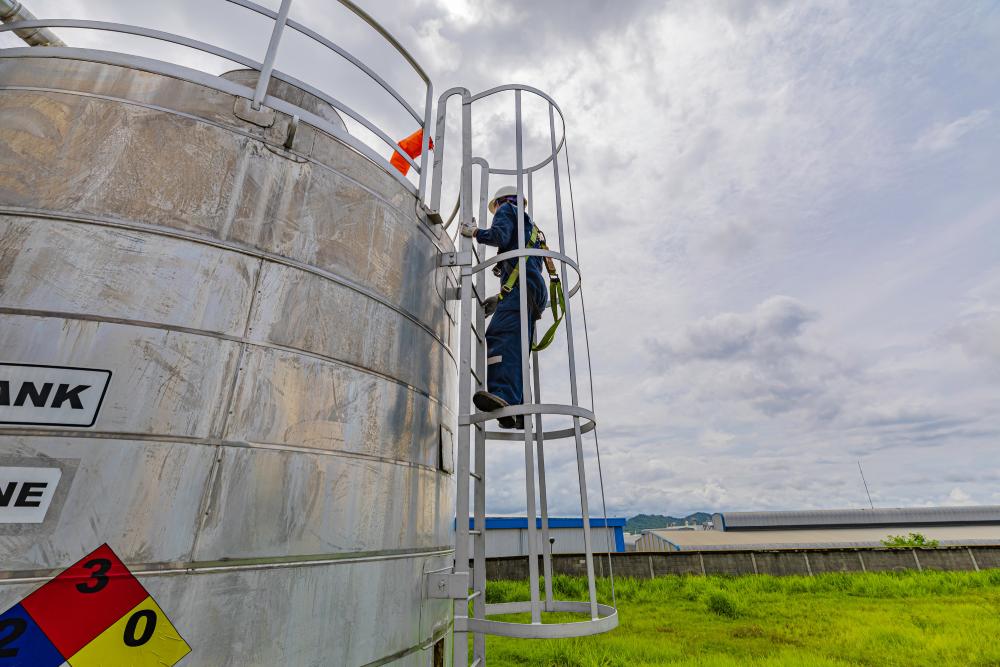
Turnkey lining isn’t necessary for every project, but in the right conditions, it delivers significant reliability and schedule advantages. Facilities typically benefit most from a turnkey approach when the application involves high risk, tight timelines, or complex installation requirements.
1. Large or Multi-Tank Projects
A turnkey provider ensures seamless sequencing and consistent quality across all assets.
- Coordinating multiple vessels, prep crews, and installation teams can easily create schedule bottlenecks.
2. Critical Assets with Zero Tolerance for Failure
Tanks, reactors, clarifiers, and chemical-processing equipment that operate under harsh or corrosive conditions demand verified surface prep, controlled curing, and documented QA — all core strengths of a turnkey workflow.
3. Tight Shutdown or Maintenance Windows
When every hour of downtime impacts production, turnkey service removes coordination delays and minimizes rework, making it ideal for plants with strict outage schedules.
4. Limited In-House Maintenance or Inspection Resources
If your team can’t support steel repairs, blasting oversight, or QA testing, a turnkey contractor fills those gaps.
- Trained specialists prevent errors that often occur when tasks are split across vendors.
5. Projects Requiring Engineering Input
Applications with unique chemical exposures, temperature profiles, or mechanical loads benefit from expert guidance on material selection and lining design.
- This is something standard services rarely provide.
6. Facilities Seeking Predictable Costs and Fewer Surprises
Turnkey providers manage the entire scope, which reduces the cost overruns that typically arise from prep issues, cure delays, or failed inspections.
Why Engineers and Procurement Teams Trust US Rubber for Turnkey Lining
Choosing a turnkey lining provider requires confidence in the contractor’s technical expertise, process discipline, and ability to deliver predictable results.
US Rubber is built around that expectation. With decades of experience and a fully integrated workflow, the company provides the consistency and control that industrial facilities depend on.
- In-House Surface Prep and Lining Specialists:
US Rubber performs blasting, repairs, lining, and curing under one roof. This eliminates prep variability and ensures every step meets specification.
- Controlled, Repeatable Installation Processes:
From adhesive application to skiving, rolling, and cure monitoring, each procedure follows proven methods executed by trained technicians. Consistency is engineered into the process, not left to chance.
- Comprehensive QA/QC Documentation
Facilities always receive clear, traceable documentation that shows the lining meets the required standards.
- Reliable Scheduling and Communication
Since all phases are coordinated internally, customers avoid the typical delays associated with multi-vendor projects.
- Experience Managing Complex, High-Risk Projects
Whether lining a single tank or an entire process train, US Rubber brings deep experience in chemical processing, water treatment, power generation, and other demanding environments.
- A True End-to-End Partnership
Instead of offering isolated services, US Rubber supports customers through the full lifecycle — from initial material recommendations to final inspection and delivery.
Ready To Streamline Your Lining Projects with a True Turnkey Partner?
Not all rubber lining services deliver the same level of quality, control, or accountability. Turnkey lining eliminates those gaps.
US Rubber delivers this level of service by design. With integrated processes, disciplined quality control, and deep industry expertise, the company provides end-to-end lining solutions that enable engineers, maintenance teams, and procurement leaders to protect their assets and keep operations running reliably.
If you’re planning a lining project or want to evaluate whether a turnkey service is the best fit, US Rubber can help you identify the right approach for your application. Contact us today.